Tumbling
Folding gymnastics mats: panels, length and who lands on them
Length decides the skill
Six feet handles stretching, forward rolls and one clean cartwheel. Eight feet covers cartwheel into roundoff for a smaller athlete. Ten feet, the 10 by 4 format, is the first length where a short tumbling pass fits without the last step landing on hardwood. Buying for a growing kid, err long; nobody has ever complained a mat had too much runway.
Panels and the fold
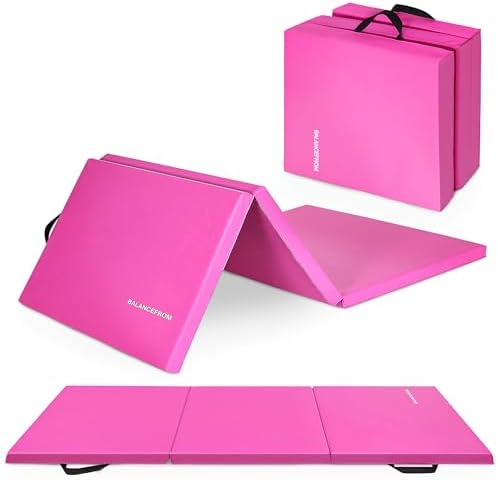
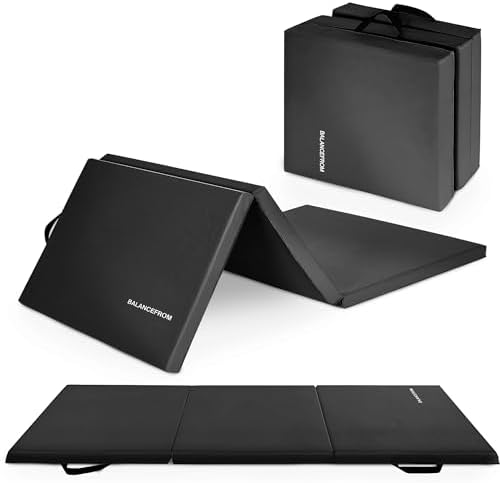
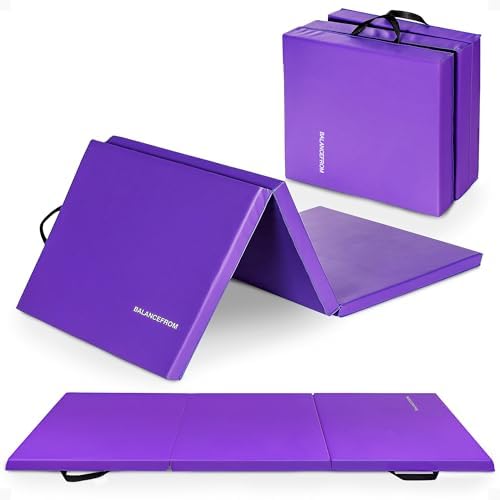
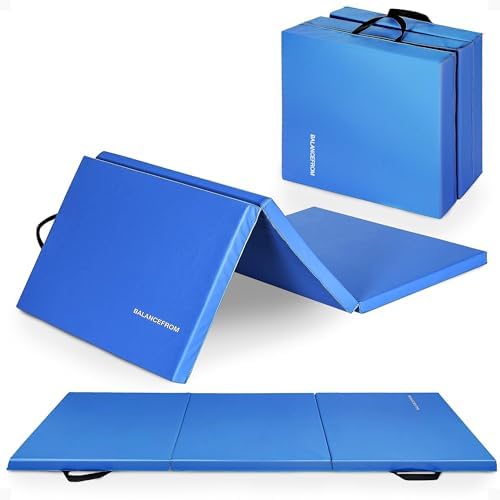
Three-panel and 4-panel mats work the same way: firm foam sections in a vinyl shell that fold into a stack with carry handles. Folded, a big mat becomes a block roughly the footprint of one panel, which slides under most beds or stands in a closet. The fold lines are also the weak points; landing a hard skill directly on a seam feels firmer than mid-panel, so orient the mat with the pass running along it, not across the fold.
Two inches of firm, not soft
Practice mats run about 1.5 to 2 inches of high-density foam. That is intentionally firmer than a crash pad: the surface absorbs impact but gives back a stable push-off for hands and feet. A mat that feels slightly hard to a parent pressing a thumb into it is doing its job. Sinking-soft foam twists ankles on landings.
The vinyl cover earns its keep
The PU vinyl shell is why these mats survive: it wipes clean after outdoor use, does not absorb sweat, and takes velcro end-to-end connections so two mats become one long line. Bare feet grip it well; socks slide on it, which every kid discovers within the first hour and half of them consider a feature.
Beyond gymnastics
The same mats moonlight for martial arts drills, stretching, wrestling horseplay and toddler crash zones at the bottom of couches. If the main use is floor exercise rather than impact, a yoga or exercise mat is the better tool; thinner, stickier, easier to carry. Cleaning either one is the same wipe-down covered in the care guide.